/filters:quality(90)/fit-in/970x750/coros-web-faq/upload/images/2cc5dfce7e767ea350d348c3c7ab28d9.png)
There’s a strange tension in cycling culture when it comes to indoor training.
On one side, riding outside is the reason most of us got into the sport in the first place—freedom, speed, nature, the social aspect. On the other, indoor training has quietly become one of the most effective ways to get fitter, more efficient, and more intentional with your riding.
For Freddy Ovett, indoor training serves a specific purpose. He uses the indoor environment to focus on the things that are hardest to control on the road.
“The major benefit is that you don’t have to steer your bike or be aware of danger. You can really focus on the effort.”
Indoors vs Outdoors: Not Mutually Exclusive
Freddy doesn’t live on the trainer year-round, nor does he think anyone should.
In winter, he’ll ride indoors once or twice a week. In summer, it might be once every couple of weeks. The frequency changes, but the purpose stays the same: control.
A number of variables are removed indoors:
- Traffic
- Terrain changes
- Weather
- Coasting, corners, and interruptions
What’s left is the effort itself.
“Especially as you get faster, there are a lot of things that require your attention outdoors. Riding indoors is a way to relax mentally and focus on other areas.”
For some athletes, indoor riding is mentally draining. For Freddy, it’s almost the opposite. With less going on around him, he can switch off while still executing high-quality work.
Power Becomes Even More Valuable
Outdoors, Freddy rides a lot by feel. Indoors, that changes, and data becomes more of a factor.
“Indoors, it’s all there all the time. You can hit an interval to the exact watt if you want. There are no corners or downhills to contend with. If this is your type of thing, indoor riding is one of the best spots to be.”
Working closely with his coach, Freddy has leaned more heavily into power-based structure during indoor sessions. Knowing his limits (and pushing just beyond them) becomes easier when the environment is perfectly controlled.
This is where recording with COROS DURA becomes critical. When indoor and outdoor sessions live in the same ecosystem, training can tell a complete story rather than being fragmented across multiple platforms.
“Always record data. Have your DURA and HR monitor on so you have consistent data to guide you.”
Indoor rides create stress, fatigue, and adaptation just like outdoor rides. If they’re not recorded, your training picture is incomplete. By tracking everything, COROS allows indoor and outdoor sessions to work together, giving athletes a more accurate understanding of load and fatigue across the entire season.
MMP Curve: Your Accountability & Motivation Tool
One of Freddy’s favorite tools is the Maximal Mean Power (MMP) Curve, a chart that shows your best-ever power outputs across different time durations.
“It’s like a diary of your best performances ever. It keeps you accountable.”
When you’re doing a max-effort workout, the MMP Curve gives you a clear target: the exact wattage you've done before—the number to beat.
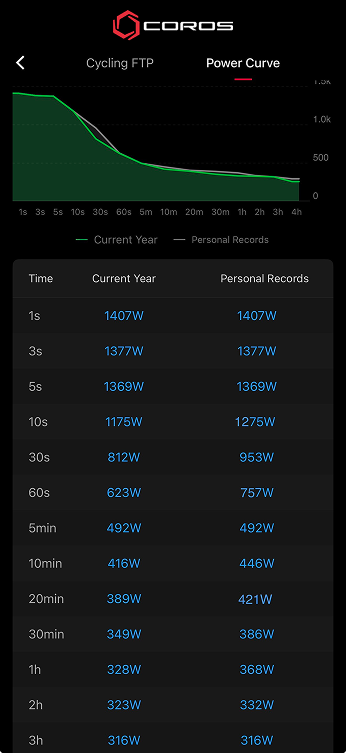
Freddy's MMP Chart
It isn't all about chasing bigger numbers, though. The MMP Curve shows where your strengths and weaknesses are. You'll know if your training is actually moving the needle, or if you've hit a plateau and need to adjust.
Freddy’s Go-To Indoor Workout
Indoor training shines when workouts need to be precise—and sometimes brutal.
One of Freddy’s core indoor sessions is a VO₂-focused workout designed to push his aerobic ceiling in a short, highly controlled window.
VO₂ Compound Efforts (Download Here)
- 10–15 min easy
- 5 min ramp through all zones (1 min each)
- 10 min easy
- 2 sets of:3 min at VO₂ max (best average 3-min power)3 min easy
“It’s very short, but highly effective. Three-minute efforts push your body harder than longer efforts.”
Doing this indoors eliminates pacing errors and terrain limitations. Outdoors, you’d need the perfect hill. Indoors, it’s always there.
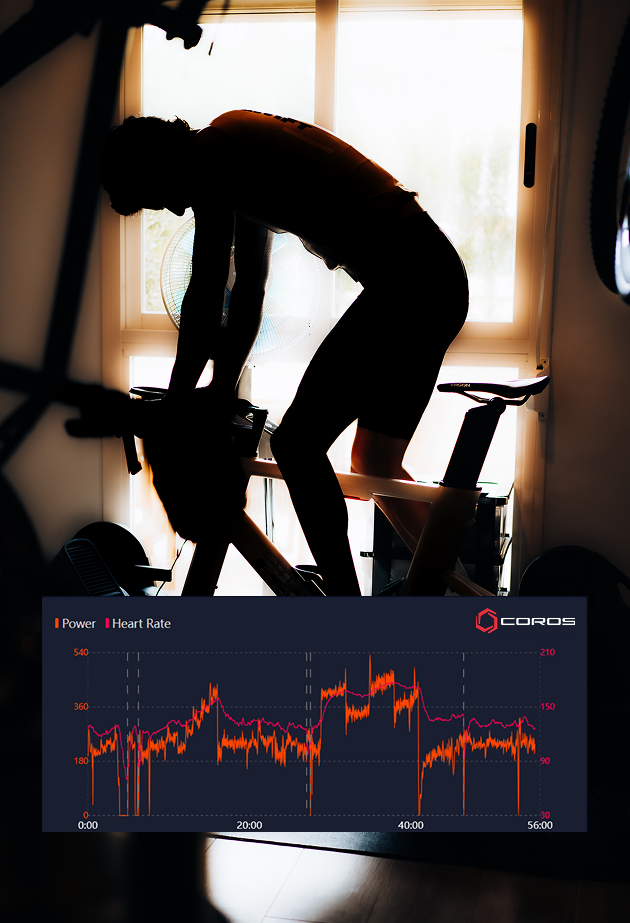
Freddy's Workout Stats
Where Heart Rate Fits In
Power tells you what you did. Heart rate helps explain how your body handled it. If you're recording the data, indoor sessions make the relationship between effort and response incredibly clear.
“Looking at power on the DURA and comparing it to heart rate is the best way to monitor where you’re at.”
Heart rate adds context to your power numbers. If you're producing the same output with a lower heart rate, it shows your fitness is growing. If your heart rate was lower than expected on a max-effort, it might indicate lingering fatigue. Using heart rate alongside your other metrics allows for deeper insights into your training.
To track both indoor and outdoor workouts, Freddy prefers COROS’ arm-based heart rate monitor.
“The comfort is unreal. Once you try it, you’ll never go back.”
Don’t Fear the Trainer
Even if there’s still an anti-indoor sentiment in cycling, Freddy doesn’t buy into it. When you remove distractions and nail your workouts with intention, the payoff shows up when you head back outside.
“There’s no shame in admitting that riding indoors can be better than outdoors for performance.”
Don't let the stigma of the trainer influence your decisions. Choose the right environment based on the purpose of the workout, record your data, and take that fitness into your next competition.