/filters:quality(90)/fit-in/970x750/coros-web-faq/upload/images/b0547c5e28962d360a542f3c0618e0b1.png)
The goal isn’t to win Cocodona. Rachel Entrekin has already proven she can do that. Twice. For round three, the goals have leveled up:
- She wants to run under 60 hours.
- She wants to see three women finish in the top ten.
- And she wants a better second half of her race.
Each goal carries weight, but not in the way most people expect.
The sub-60 barrier is a line she believes is ready to break. The top ten goal is bigger than her—something collective that shifts the perception of what women can do in a 200-plus mile race. And the second half? That one is personal. She knows where she gave time away in the past. And even the Queen still has her doubts.
Pack Mentality
Getting to sub-60 will be hard, and Rachel knows that. But, she doesn’t believe she has to do it alone.
If anything, Rachel thinks the opposite.
"I think it's gonna be really hard. But I think we have a good group. And if there's one thing I learned from Chianti, it's that pack mentality works."
The idea of running sub-60 isn’t about one athlete having a perfect day. It’s about something shared—something that builds across miles, across competitors, across effort.
She felt it earlier this year at Chianti Ultra-Trail, a 120K race sanctioned by UTMB.
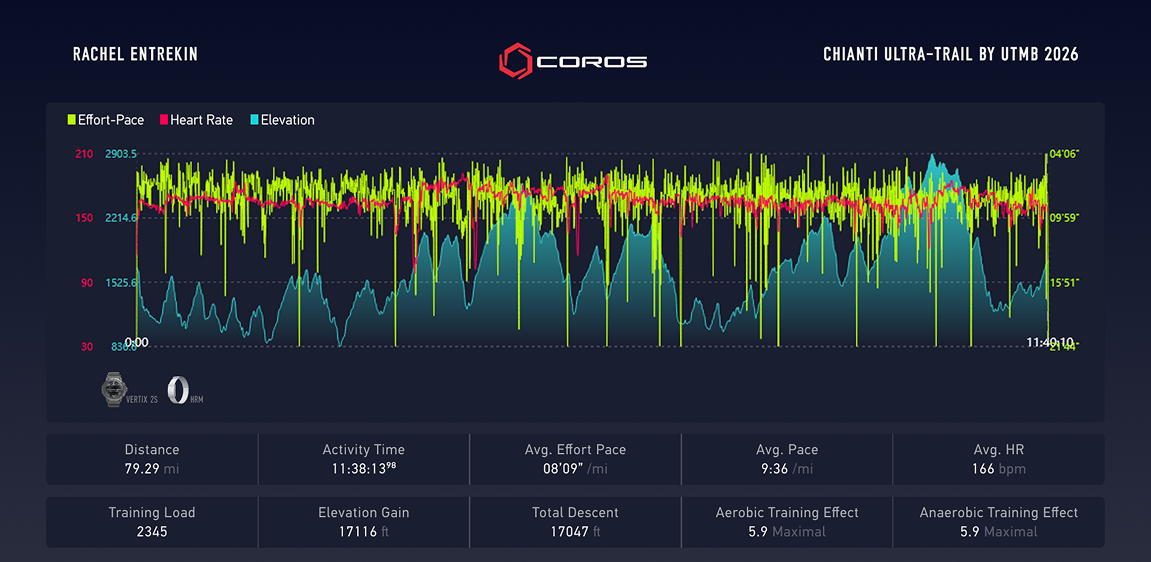
Three women, moving together through the course, speaking little, but never disconnected. No one was officially leading. No one was conceding. They just kept tightening the pace, responding to each other without needing to say anything.
“It almost felt like we were working together,” she says. “We just kind of took turns stringing everybody along.”
The effect was subtle but undeniable. A climb taken a little faster than expected. A downhill pushed just slightly harder. No one wanting to lose contact. No one willing to let the pace soften.
Maybe it was only five percent faster than they would have run alone.
But five percent, over time, becomes something else entirely.
“All three of us beat the course record,” she says. “Because we were just running together.”
That’s the opportunity she sees when she looks at Cocodona this year.
“I think we have a really great opportunity to propel women’s sports forward,” she says. “And if I get to be a part of that, then, hell yeah.”
She wants to be one of the women pushing under 60 hours. But if she isn’t—if someone else has the day, if the race unfolds differently—she still wants to be in it. Still wants to contribute to the pace, the pressure, the possibility. Because barriers like this don't often break in isolation. Rather, they break when enough people believe it can.
A Rising Tide
That same idea of shared effort and momentum extends to her second goal: three women in the top ten.
A singular standout performance is an outlier. Depth confirms that the sport is advancing.
“I think that would be really sick,” she says. “If I’m one of them, great. If I’m not, then I want to at least help try to push that forward.”
It’s a different way of thinking about success. Less about hierarchy, and more about movement.
At Chianti, the race didn’t feel like athletes separating themselves from each other. It felt like they were building something together first, before the race finally split open. By the time it did, the depth outcome had already been shaped.
She expects something similar at Cocodona.
There are stronger women in the field now. More experience. More belief. If the early miles settle into that same quiet cooperation, then the battle for top ten becomes crowded.
For Rachel, that’s the point. Not just to prove what one athlete can do, but to shift what the race looks like entirely.
An Honest Race
The third goal is the simplest to say, and the hardest to execute: a better-raced second half. It's personal, it's important, and it doesn't involve podium or place.
Some of it is inevitable. In a race this long, everyone slows. Maintenance becomes part of the process—eating, managing feet, solving problems before they grow.
But she also knows some of it is optional.
“A lot of it is me giving excuses,” she says. “Like, I’m tired, I’ll walk this. I’m at mile 160, I’ll walk it.”
That’s where the watch comes in. Not to push her, but to give her the information to act.
“I think having it will help me be like, okay, I am not moving fast. I need to move fast.”
And for Rachel, it's new. Before joining the COROS team, Rachel was a self-proclaimed watch newbie. She often used to run with just the time of day pulled up. This year, she plans to lean into the features a bit more.
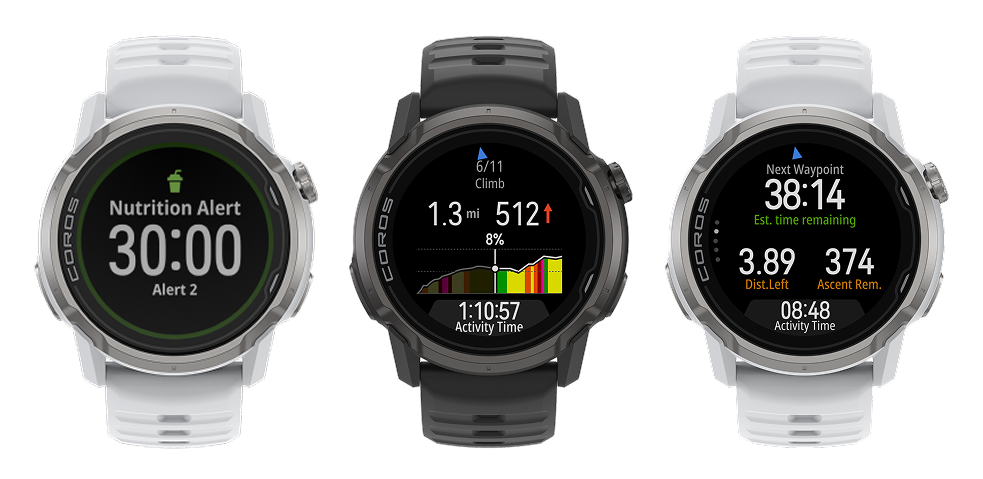
Rachel is excited to add Nutrition Alerts, Hill Alerts, and Pacing Strategy to her training for the first time, taking advantage of some of COROS' newest trail features. Most importantly, though, she will be racing with mapping and navigation.
"I've gotten lost at Cocodona before, just running and not realizing that I'd gotten off trail," she said. "So I think having the map feature on is going to be nice this year because I don't really have that much time to waste."
It’s a small intervention, but in a race defined by small decisions, it matters. The same is true for how she handles the inevitable lows. Most of them, she’s learned, are solvable.
“Most bad patches only last 20 minutes if you actually take steps to address them,” she says. “While you're feeling bad, don't fuel for that moment, fuel for the future that you want to be having.”
At Chianti, when the gap opened and the other women drifted ahead, she felt the moment start to slip. The instinct could have been to chase harder. Instead, Rachel didn't panic, took some fuel, and focused on her own effort. Eventually, her legs came back and the gap closed.
That’s what she wants to carry into Cocodona: strength with restraint. The ability to recognize what’s actually happening, and respond without letting the moment spiral.
Heavy is the Crown
Even though she's won almost every ultra she's entered, Rachel still has race day nerves. They used to arrive days before a race, sitting heavy in her chest. Now, they’re quieter. More selective. Sometimes waiting until the last possible moment.
Before Cocodona last year, they showed up because of who was on the start line. She wasn’t sure she belonged there yet. There’s a different kind of pressure when you line up next to someone you’ve never measured yourself against.
This year feels different. Not because the stakes are lower. If anything, they’re higher. But she understands now that nerves are just misplaced energy. Her new solution is to give them a boundary.
Get to the start line.
That’s it.
Once the race begins, there’s no space for nerves. Not because she’s fearless, but because she’s busy. Running takes focus, and racing involves a plethora of decisions and logistics that are more important than worry.
“If I feel nervous,” she tells herself, “that’s fine. But once I’m running, it doesn’t get to take up space.”
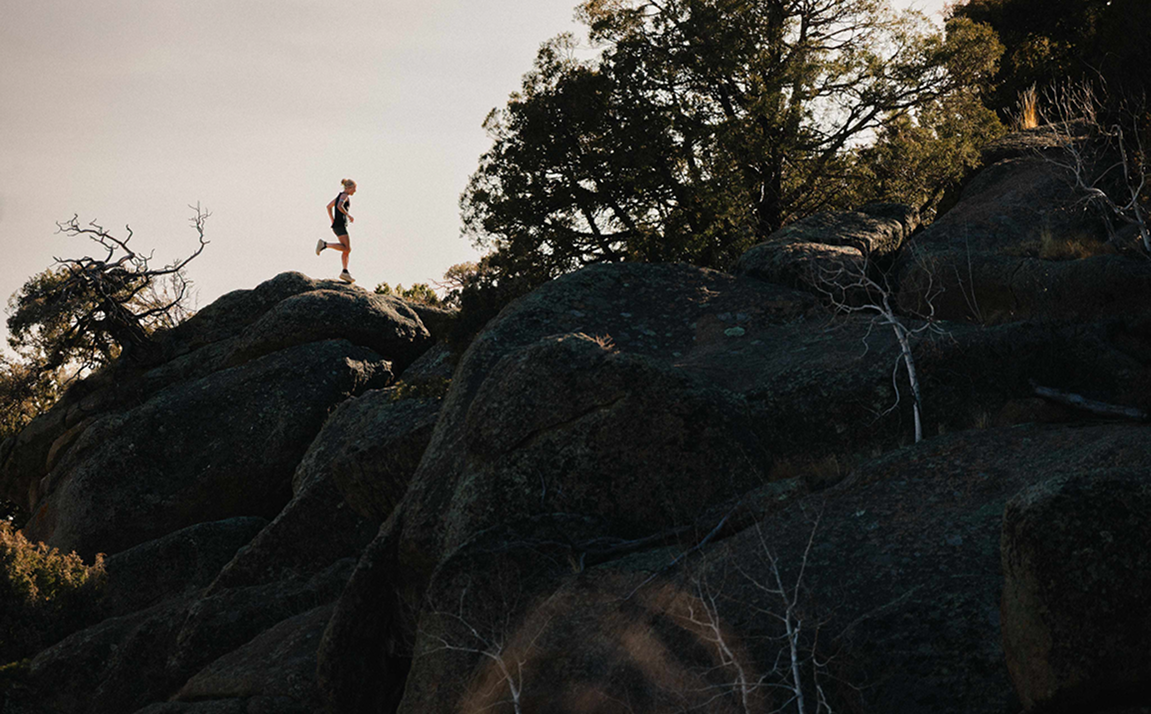
Cocodona will still play its games. The early heat. The long middle miles. The final stretch through Eldon without a pacer, where every decision belongs only to her. Some of those decisions will be familiar. Some will be new problems to solve. That's the race she's ready to run—not just for herself, but for what the field could become.
Because the goals she’s chasing don’t exist in isolation.
They exist in the space between runners. Between effort and restraint. Between what’s been done and what’s about to happen.
And somewhere out there, across 250 miles, she believes that space is about to shift.
“I think it’s going to be rad as hell.”