/filters:quality(90)/fit-in/970x750/coros-web-faq/upload/images/b8425f923e8c6f5a2cee85345718a3e6.jpg)
You crossed the finish line, soaked in the glory, and now the adrenaline is wearing off. Should you back off or clip back in tomorrow? In this article, COROS Coaches break down the post-event recovery strategy for cyclists and how to best transition into structured training so you can come back stronger.
Post-Ride Recovery Timing
It is completely normal to feel the post-event blues after your goal ride wraps up. Whether it was a gran fondo, a criterium, or a multi-day stage race, your body has absorbed significant physiological and psychological stress. The most important thing to focus on in the days that follow is recovery, not fitness maintenance.
The distance and intensity of your event will largely determine how long you should rest before resuming structured training. Use the table below as a starting guide:
| Event Type | Suggested Recovery |
| Short Criterium / Circuit Race (under 60 min) | 2–3 days of rest or easy spinning |
| Gran Fondo / Century Ride(100–160 km) | 4–7 days of rest, with gentle movement in the second half |
| Full-Day Endurance Event (160–200+ km) | 1–2 weeks of rest, adding low-intensity riding in week two |
| Multi-Day Stage Race or Ultra-Endurance Event | 2–4 weeks of rest, with easy activity beginning in week two or three |
These recovery periods are guidelines based on research and coaching experience. Every rider is different. Always listen to your body, but if you need more time, take it.
What Can You Do During Recovery Days?
Recovery doesn't mean doing nothing, it means being intentional about how you help your body rebuild. Here are a few effective strategies regardless of whether you are fully resting or transitioning into your next training block:
- Easy Spinning: A 20–30 minute ride at a very low effort (Zone 1) with no climbs can flush out metabolic waste and keep your legs from stiffening up without adding stress to your system.
- Stretching & Mobility Work: Cyclists are prone to hip flexor and lower back tightness from time in the saddle. Gentle yoga or targeted stretching for 10–20 minutes daily can significantly reduce soreness and improve recovery.
- Sleep: Without a demanding training schedule, lean into extra sleep. Growth hormone, critical for muscle repair, is primarily released during deep sleep. Set the alarm later or take a nap if your schedule allows.
- Nutrition: Keep protein intake elevated post-event to support muscle repair, and replenish glycogen stores with quality carbohydrates. Don't undereat just because your training volume has dropped.
How Can Your EvoLab Metrics Help with Recovery?
Base Fitness
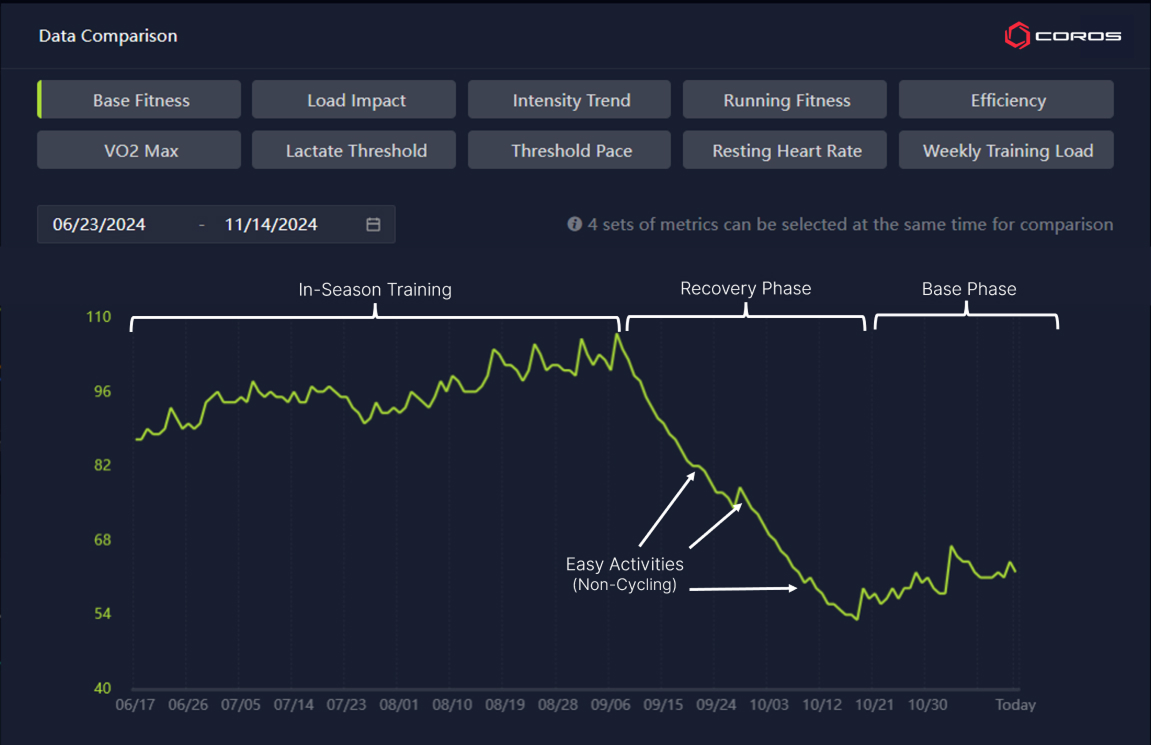
After a goal event, it's normal and expected to see a decline in your Base Fitness during the recovery phase. Don't interpret this decline as negative. It's your body signaling that it is absorbing the training stress and rebuilding. By using this metric effectively, you can stay on top of your fitness trends, ensuring a smooth transition into your next season of peak performance.
Load Impact
Think of post-race recovery like a reverse taper. In a taper, you gradually reduce volume leading into a race. Recovery is the mirror image of that process, gradually bringing volume and intensity back up over time.
Load Impact is an average of your Training Load over the last 7 days, showing the stress that your body is currently under. Monitoring this metric after your event ensures that you're not spiking your load prematurely.
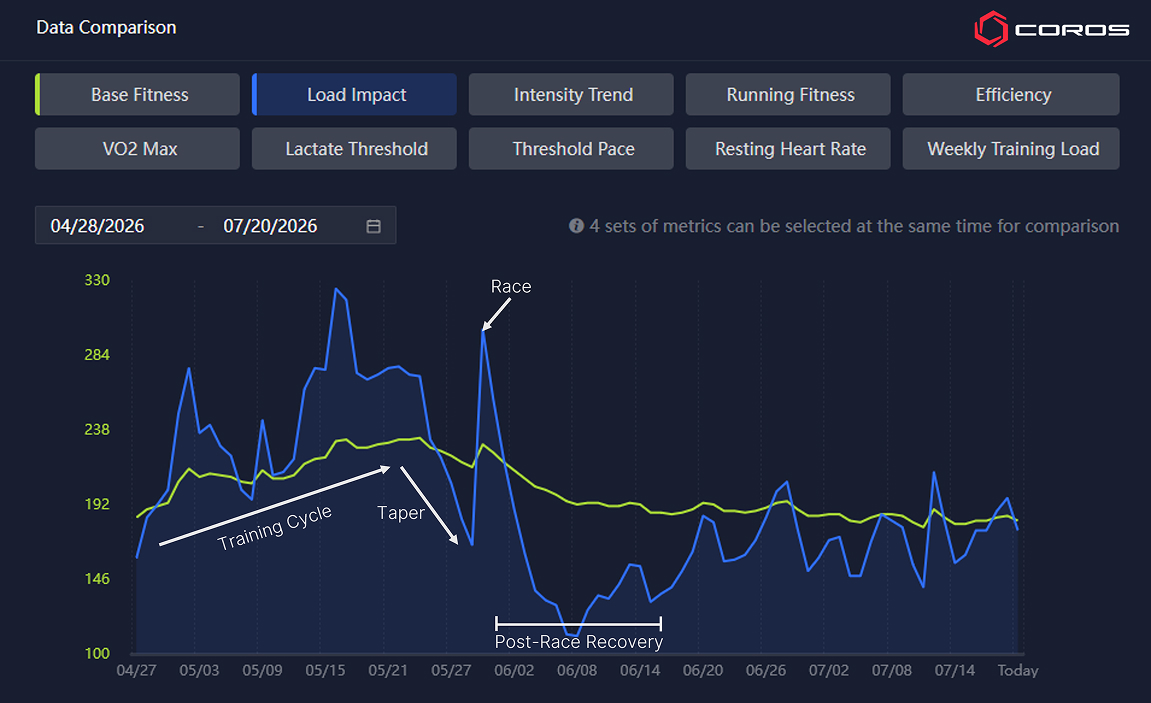
Immediately after the race, you'll see a spike due to the load from the race itself. In the days after, focus on short, low-intensity activities (if you do any activities at all) to ensure you dip into a recovery state. If Load Impact is lower than Base Fitness, your load is low enough to allow your body to recover. Try to reach at least a 20% difference between the two values, as goal races will require more potent recovery.
Recovery Timer
You can quickly check your recovery status using the widget on your COROS watch or in Training Hub. The recovery timer provides feedback on the time your body needs to reach full recovery and suggests when you're ready for easy or hard training, based on your fitness level, training load, cycling performance, and remaining recovery time.
The recovery timer should return to 100% a few days after your event. However, it's still important to listen to your body, especially after longer races. Physical recovery and mental recovery don't always move at the same rate, and returning to hard training before you're mentally ready is just as risky as doing so too soon physically.
Coaching Insights
Every cyclist is different, and what works for an elite racer may not be right for your body or your goals. If you completed your goal event and still feel flat, fatigued, or unmotivated after your recovery window, that's a signal not a setback.
This is an ideal time to work on areas that often get neglected during a training cycle: core strength, hip mobility, bike fit, or even experimenting with a new discipline like gravel riding or track sessions. Coming back refreshed and with new skills will make your next training block far more productive.