/filters:quality(90)/fit-in/970x750/coros-web-faq/upload/images/6a4cc3b80bf5c15283c21e04417d19cb.jpg)
Ultra-distance racing is often portrayed as a battle of endurance. But over 4,367 kilometers, fitness alone isn't enough.
For COROS athlete Victor Bosoni, setting a new Tour Divide Fastest Known Time (FKT) came down to something less obvious: race management.
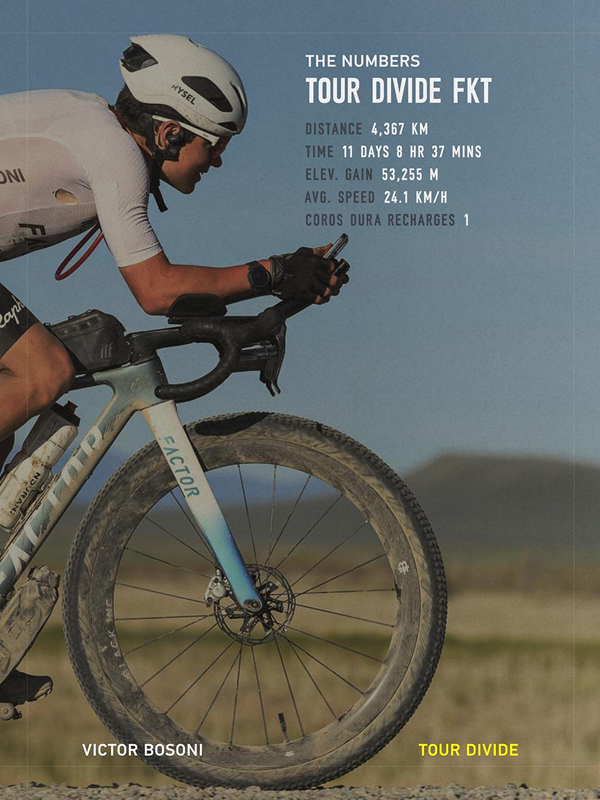
Every decision mattered—from when to sleep and eat, to how to recover, navigate, and manage effort over nearly two weeks. Across 11 days, 8 hours, and 37 minutes, Victor covered 4,367 km with 53,255 meters of climbing at an average speed of 24.1 km/h, charging his COROS DURA only once.
By the Numbers
- Distance: 4,367 km
- Time: 11 days, 8 hours, 37 minutes
- Elevation Gain: 53,255 m
- Average Speed: 24.1 km/h
- COROS DURA Recharges: 1
Recovery Isn't Lost Time
When most people think about racing the Tour Divide, they imagine riding longer and sleeping less. Victor approached it differently.
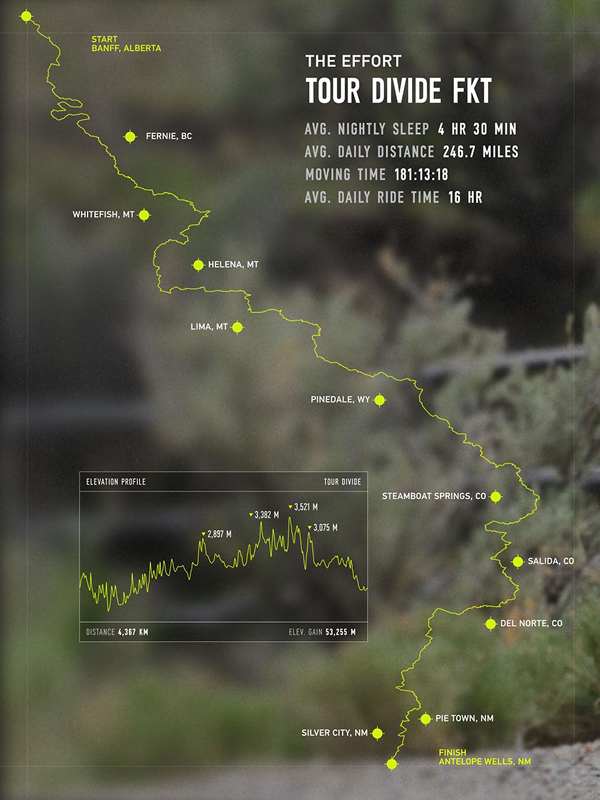
His initial plan was to sleep around four and a half hours each night, but instead of sticking rigidly to that goal, he adapted to how his body responded. The first night proved especially difficult. The excitement of the race and the intensity of the opening day kept his heart rate high enough that quality sleep simply wasn't possible. Rather than lying awake and wasting valuable time, he made the decision to get back on the bike and continue riding.
For the remainder of the race, his sleep naturally settled between four and five hours each night.
More importantly, Victor prioritized quality over quantity. Instead of bivouacking trailside, he chose to sleep exclusively in warm places such as hotels, motels, and Airbnbs whenever possible. With so little time available for recovery, he wanted every minute of sleep to be genuinely restorative.
Each stop also became an opportunity to recover beyond simply sleeping. He took time to care for his body, apply skincare products, and maintain his bike and drivetrain. Those seemingly small routines helped him maintain a remarkably consistent level of performance throughout the race, reaching the finish without pain or significant physical issues.
Rather than viewing recovery as lost time, Victor treated it as another performance strategy.
Staying Ahead of the Bonk
One of the easiest mistakes during a multi-day ultra is simply forgetting to eat.
As fatigue accumulates, the sense of time begins to disappear, making consistent fueling increasingly difficult.
To stay ahead of this, Victor relied on the Nutrition Alerts feature on the COROS DURA. Every 30 minutes, our bike computer reminded him to eat, helping him maintain discipline throughout the race and reducing the risk of hypoglycemia.
Over eleven days of racing, those small reminders became a major competitive advantage, ensuring that nutrition remained consistent even when fatigue was at its highest.
Navigation Without Interruptions
Long-distance races rarely unfold exactly as planned.
During the Tour Divide, organizers introduced several route changes, requiring Victor to import updated GPX files while already racing. With the COROS app and DURA, he was able to upload new routes—including files covering several hundred kilometers—without stopping his activity or disrupting his rhythm.
Another feature that became essential was the ability to display custom checkpoints directly on the navigation screen. Water sources, mountain pass summits, gas stations, and potential rest stops were always visible on the map, eliminating the need to repeatedly stop and check his phone.
By reducing logistical decisions on the fly, Victor was able to stay focused on riding.
Learning From the Data
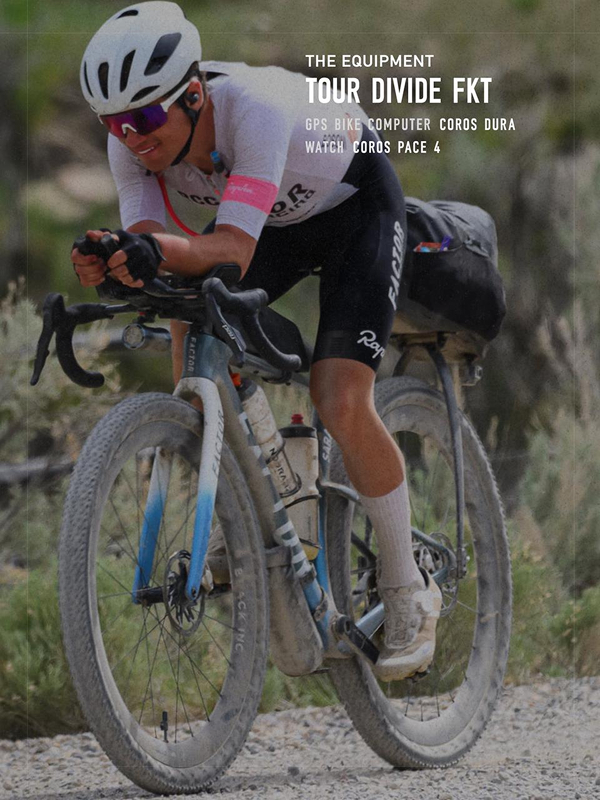
Throughout the Tour Divide, Victor also used his COROS PACE 4 to monitor his sleep and recovery.
The data helped quantify what he was feeling—especially after the first night, when elevated heart rate limited both the duration and quality of his sleep. Rather than relying solely on perception, he could better understand how much recovery he was actually getting before making decisions for the following day.
In an event where every decision compounds over nearly two weeks, objective recovery data becomes another valuable tool for managing performance.
One Charge in Eleven Days
Battery life becomes part of race strategy in an event lasting nearly two weeks.
Despite riding across 4,367 km, Victor only needed to recharge his COROS DURA once. Thanks to the strong sunshine throughout the event, the solar charging feature significantly reduced battery consumption each day.
Knowing his bike computer would last from start to finish meant one less piece of equipment to think about, allowing him to stay fully focused on the race itself.
Thousands of Good Decisions
Setting an FKT on the Tour Divide isn't about making one heroic move.
It's about making thousands of small decisions correctly.
Choosing quality sleep over simply less sleep. Fueling before hunger appears. Recovering every time you stop. Navigating efficiently without breaking rhythm. Trusting your equipment to keep working day after day.
Over 4,367 kilometers, those choices compound.
For Victor Bosoni, they added up to a new Tour Divide Fastest Known Time, and another reminder that in ultra-distance racing, race management is often the greatest performance advantage of all.