/filters:quality(90)/fit-in/970x750/coros-web-faq/upload/images/bb561ac06f589d3dfbc275329c8a082a.png)
Winter in California’s Eastern Sierra Nevada is as brutal as it is beautiful. Granite walls rise above the desert floor, catching alpenglow at sunrise before giving way to wind-scoured ridgelines and shadowed couloirs filled with snow and ice. Storms can arrive without warning, erasing tracks and halting progress, and even in stable weather, the cold lingers while exposure demands constant precision. It’s a vast, quiet, unforgiving landscape; and that’s exactly what draws people in.
Cody Townsend, Tommy Caldwell, and Bjarne Salen recently completed an ambitious route here: the first-ever winter traverse of Norman’s 13. Linking thirteen peaks over 8 days, the effort required endless transitions and continuous movement through one of the most complex alpine environments imaginable.
The challenge played directly to their combined strengths. Townsend’s efficiency on skis, Caldwell’s technical climbing mastery, and Salen’s experience with long, demanding ski mountaineering missions created a rare and complementary partnership, a modern alpine “dream team” built not on overlapping abilities, but on how seamlessly their skills fit together.
What is the Norman’s 13?
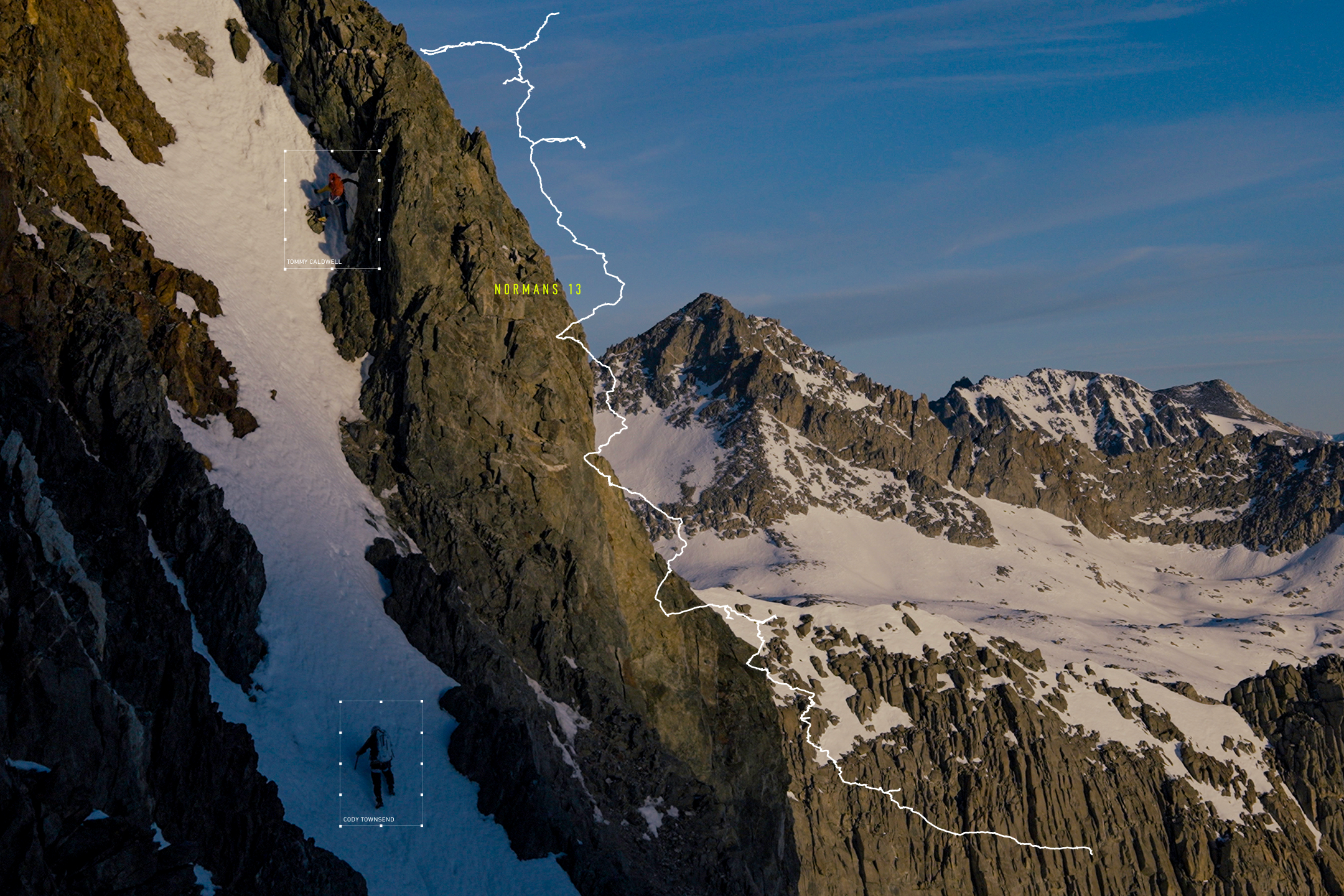
The full traverse covers roughly 100 miles, with an estimated 50,000 feet of elevation gain. This is continuous, technical movement across exposed ridgelines, steep faces, and alpine terrain.
Background & Motivation
The seed for the expedition was planted not in winter, but in summer. For Townsend, the idea took shape after being inspired by Kilian Jornet's States of Elevation Project, where Kilian set the Summer FKT (Fastest Known Time) of the route.
“Seeing the headlines and stories made me dive deeper into the route itself,” Townsend explains. “It was pretty quick that I realized the summer route connected a ton of great ski lines, and with the right conditions, it would not just be a peak-bagging trip but a journey filled with skiing, suffering, and great climbing... three aspects that make for epic adventures."
When Townsend pitched the idea of this traverse to his frequent partner, Bjarne Salen, he was all in.
“The east side of the Sierra is one of the most beautiful mountain ranges in the world… Seeing it from the desert each time is blows my mind,” Salen said.
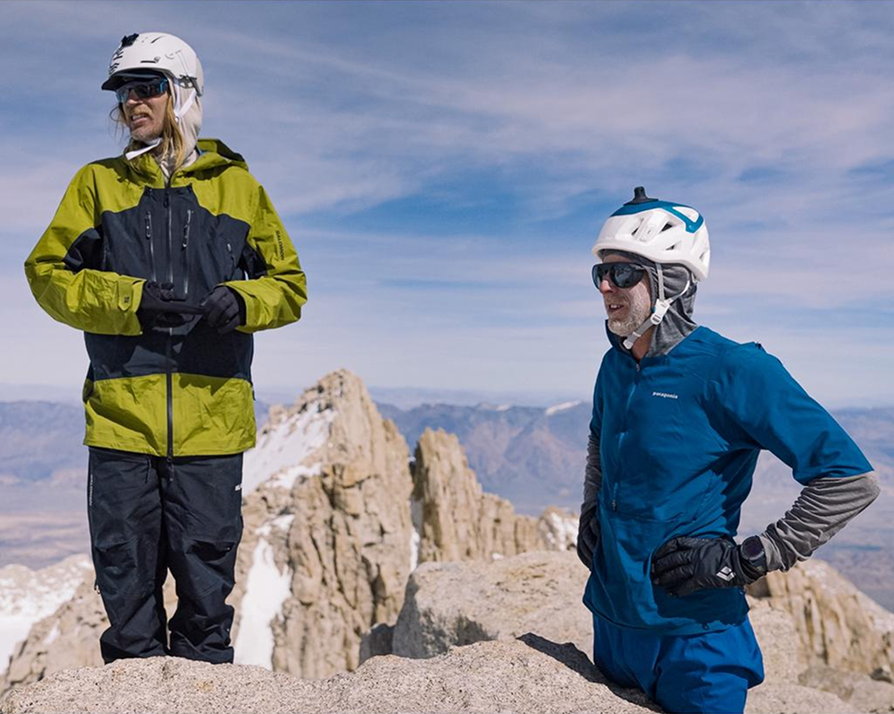
On this adventure, the duo would recruit an unlikely ally to join them on this pursuit: legendary climber Tommy Caldwell.
“Seems to be that people call me when they want to do painful things… which I love,” Caldwell remarked. “When somebody awesome invites you to do something cool, you just have to say yes. This being primarily a skiing trip, it didn’t really fit into my normal wheelhouse, but luckily, I have enough experience and can contribute with the climbing bits.”
With the team assembled, the stage was set for an extraordinary journey through the Sierra’s rugged terrain.
Planning & Preparation
Preparation for the traverse unfolded over months, anchored by an intense, highly specific training effort. Cody Townsend led the charge, building his deepest training block to date over the summer, pushing his fitness while logging long, technical scrambling days in the Sierra. As winter approached, that base evolved into more targeted work: scout missions, combined ski-and-climb days, and refining movement across mixed terrain.
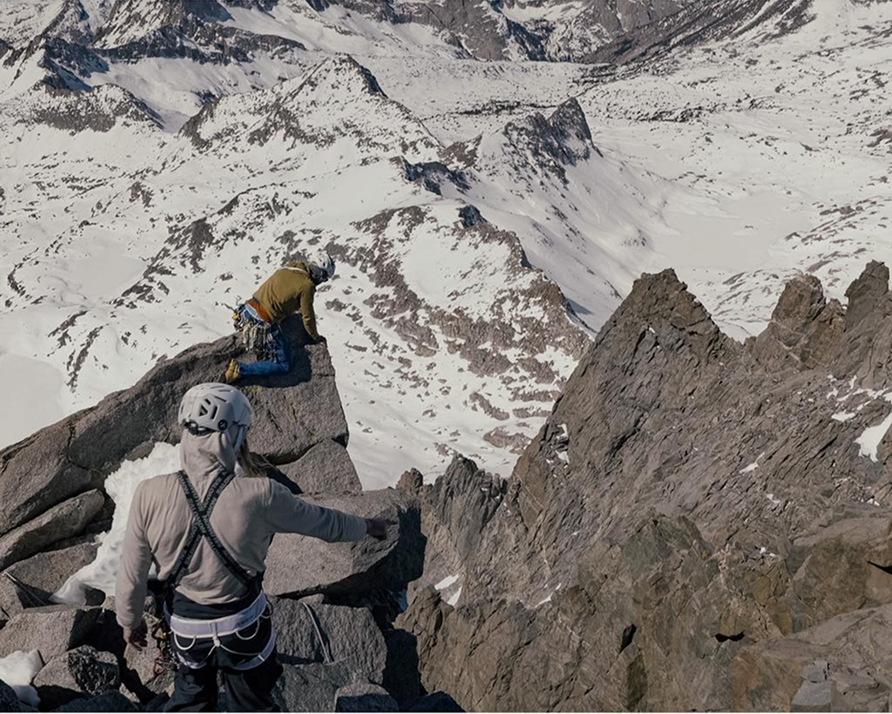
His focus centered on the route’s technical demands. While skis would cover much of the distance, a significant portion required exposed rock travel, often with skis strapped to his pack. Training emphasized efficient transitions, fluid movement between climbing and skiing, and the ability to sustain effort over long, demanding days.
Salen took a more consistent, durability-driven approach. Cross-training, gym work, and steady physical therapy built resilience, while careful attention to nutrition and hydration ensured his body could handle prolonged output at altitude.
By the start of the traverse, their training had built the fitness, efficiency, and endurance needed to take on the route.
The Traverse Experience
For Townsend, Day 1 unraveled almost immediately. Somewhere between a bad reaction to gluten and lingering illness, his body started shutting down before the expedition had even found its rhythm. Halfway through the first day, the objective clarity of months of preparation collapsed into something much simpler and more urgent.
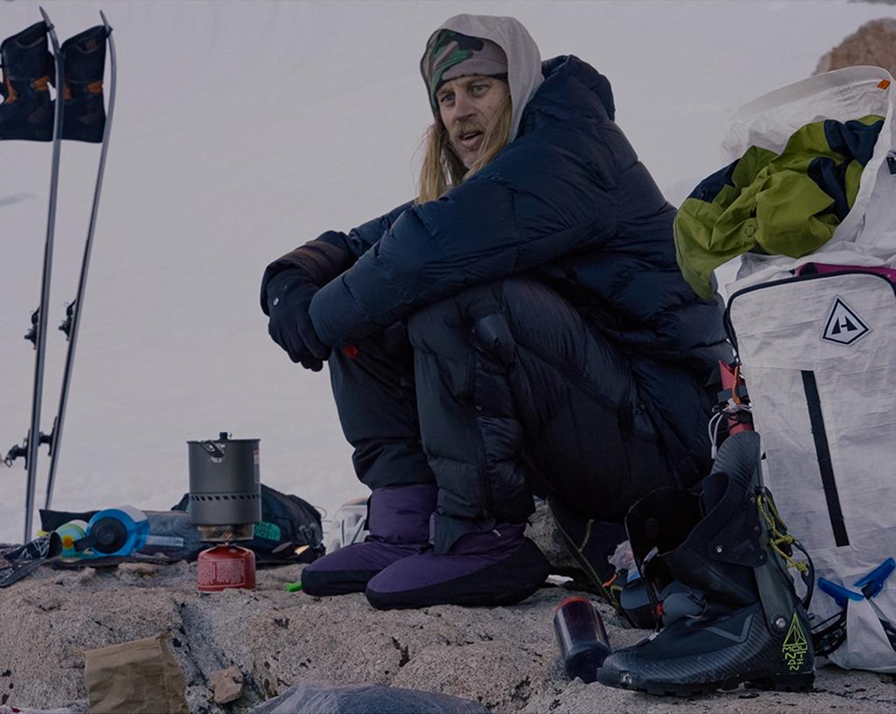
“You’re not giving up,” he told himself over and over.
He dug deeper than he expected he’d have to, and certainly earlier. But by the time Day 1 ended, something had shifted. He’d set a precedent: if he could endure that and keep moving, nothing else on the route would be allowed to take him out.
For Caldwell, the opening days felt almost euphoric. The Sierra delivered something rare. Warm, still air at 14,000 feet, snow underfoot, and a sense of vast, quiet openness that felt worlds apart from harsher alpine ranges. He moved easily at first, fueled by the scale of the landscape and the promise of the days ahead.
As the days unfolded, long stretches along the John Muir Trail became unexpectedly brutal: heavy packs, inconsistent snow, endless transitions between walking, skinning, and skiing. The sun bore down relentlessly, reflecting off the snow with punishing intensity. Lips cracked, skin burned, energy drained in the afternoon heat. Progress became uneven.
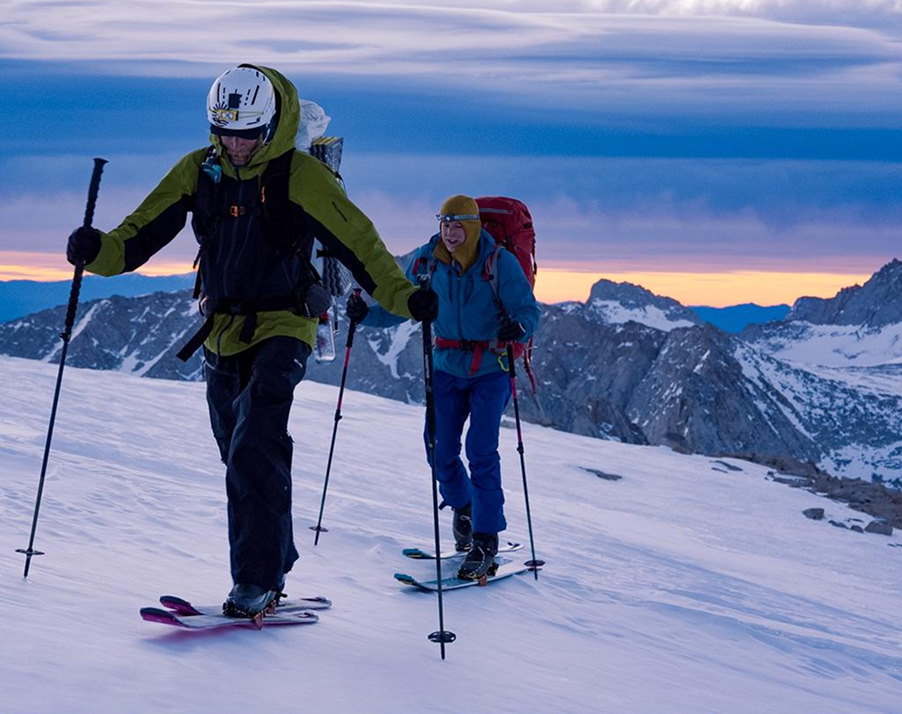
An isothermic snowpack forced the team into a nocturnal rhythm. Alarms rang at 2:00 a.m. Days ended by late afternoon, when the snow turned to a slow, energy-sapping mess. What should have been efficient travel became exhausting trail breaking. Every step cost more than it should.
Hazards never arrived in the dramatic ways they might have feared. There were no major avalanches, no violent storms. Instead, the danger lived in subtler forms: steep, unforgiving hardpack above exposure where a single mistake could send a climber accelerating uncontrollably down the mountain. Caldwell likened it to free soloing on skis. Total reliance on edge control, no margin for error.
For Townsend, Day 3 marked the lowest point. It was his birthday and also the biggest day of the route, stacking massive vertical gain across multiple peaks. But his body was still struggling. Every breath came sharp and painful, “like being stabbed… with thousands of hot needles.” He cried three times that day, overwhelmed by the physical strain. And yet, he kept moving.
Sleep offered little relief. Nights were short, four to seven hours at best, and rarely restful. Cold, discomfort, and even something as mundane as snoring chipped away at recovery. By the final days, small problems compounded: a punctured sleeping pad, broken ski boots, bodies worn thin.
The crux came where disciplines blurred. The East Face of Middle Palisade demanded movement that resisted categorization, neither fully rock, nor snow, nor ice, but some precarious combination of all three. It required constant adjustment, careful decision-making, and total focus.
What should have been a final push turned into a full-blown endurance test. The last day stretched into over 24 hours of continuous movement. Climbing, skiing, navigating the final traverse, and then pushing all the way back to civilization.
The Finish
In the end, the first winter traverse of the Norman’s 13 came down to sustained commitment in a landscape that never let up. Over eight days, Townsend, Caldwell, and Salen moved through complex terrain with focus and intention, managing conditions, fatigue, and the constant demands of the route. Their effort expands what’s been done in the Sierra during winter, setting a new benchmark for future teams drawn to big, technical traverses. More than anything, it reflects a style of movement defined by preparation, partnership, and the willingness to stay engaged from start to finish across one of the most committing mountain environments in North America.